By Emma Sconyers
Tomado de los blogs de Plos

By Harvey McDaniel, 2004
Life is serendipitous, isn’t it? Recently, I was heading up to Boston from Rhode Island when I ran into my friend Hilary and her sister Shannon. A few minutes into the conversation, I learned that my friend’s sister works for a company that oversees the installation of “green” energy technologies like solar panels and wind turbines — a happy discovery, as I was on my way to interview Yet-Ming Chiang, a leading researcher on batteries and a Materials Science professor at MIT, for a story I’m doing about improving wind energy in Hawaii.
My story focuses on the problem with storing the energy generated by the wind turbines and the current lack of usable technologies for US wind farms. Shannon and I didn’t discuss batteries but she did have a few things to say about installing green technologies like solar panels and wind turbines.
First of all, according to Shannon, solar panel farms are not all they’re cracked up to be. The sheer amount of land needed to house cells can take up a vast amount of space. A 3, 500 acre solar power plant was up and running just a few weeks ago in the Mojave. Some are excited that the US has managed to take such a big step forward in renewable energy, but the farm has decimated large tracts of desert to install the high-tech panes.

Provided by the US Fish and Wildlife Service, 2013
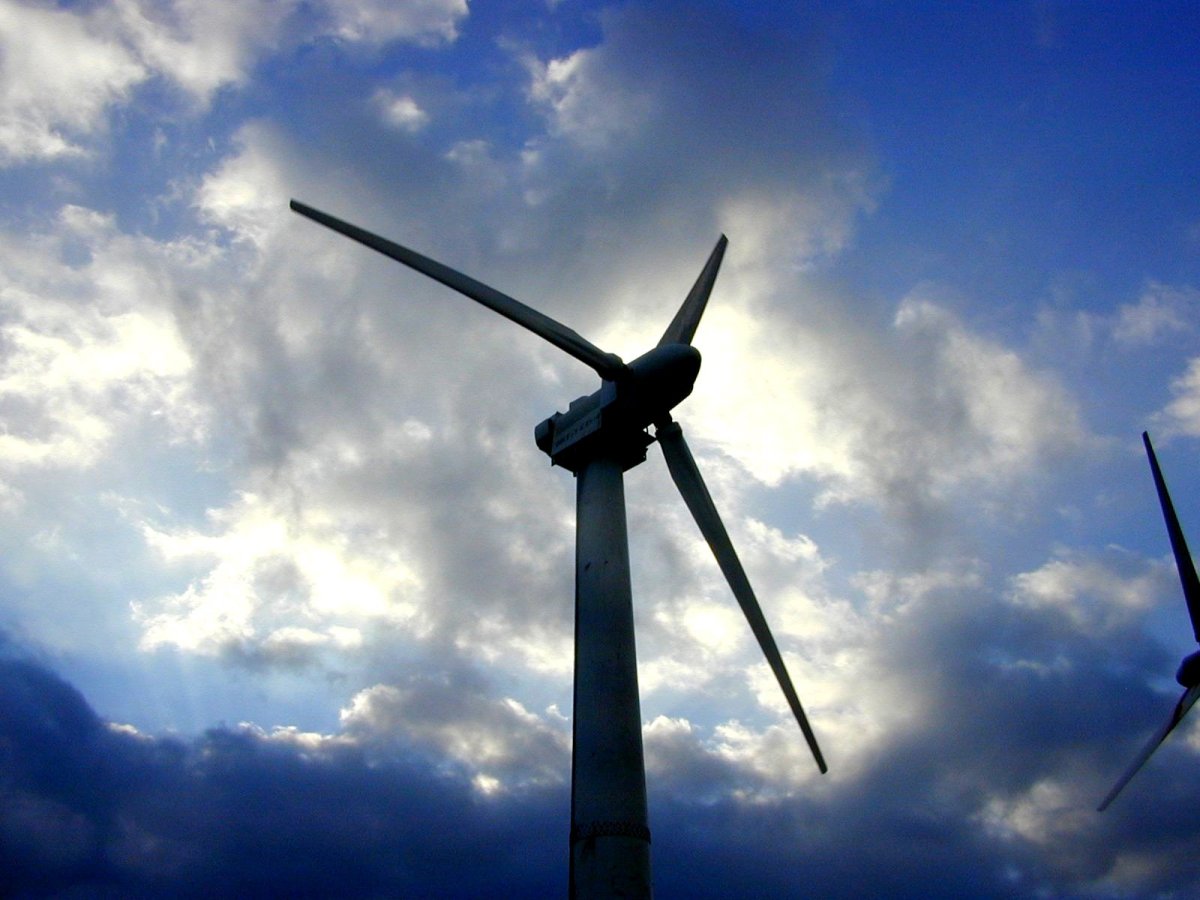
“Desert” isn’t just dust and dried up tumble weeds. The dusty terrain of the Mojave is overflowing with wildlife. Shannon flips through pictures on her phone to show me delicate purple and white Mariposa lilies, ancient looking Joshua trees, swaths of bright yellow wildflowers, and a desert tortoise peeking out of his burrow. The next picture shows Shannon dwarfed next to a wind turbine cylinder. Even after working with them for years she’s still in awe of how gigantic they are. In her opinion, after working to relocate the many displaced tortoises after the solar plant went up, she much prefers wind turbines. Solar is good if installed on existing infrastructure (as Germany has done, covering parking garages, the sides of train tracks and even old military bases with solar panels) but to cover untouched land like the Mojave is a step towards environmental devastation. She believes wind turbines put less stress on the surrounding environment when they’re installed.
However, this may just be Shannon’s personal anecdotal evidence. Wind turbines aren’t without their ecological fall backs and criticisms. A recent studyestimated 888,000 bat and 573,000 bird fatalities per year from collisions result from wind turbines in the United States. There’s a particular worry about eagles getting mixed up with the whirring propellers as they scan for prey below.
And on the other side of the coast, in Cape Cod, the battle to install offshore wind farms rages on. Environmentalists are concerned for right whale populations as well as sea birds. They’ve even gone so far as to legally challenge Cape Wind Associates, the company responsible for installation.Then this year,public health officials pushed for further studies on wind turbines effects on the human populations, fearing the last study was slapdash and data cherry picked
Obviously finding solutions to replace coal and oil burning power plants are necessary. However, we must not be hasty in labeling them as purely “green” just on the grounds of emissions. As we move forward in developing and perfecting these technologies it is important to consider their impact on the environment—just as we have considered the impact of dumping nuclear waste or pumping carbon dioxide into the air and sea. We must always step back and see what else needs to be done. Even if it’s just taking into account a little tortoise in the Mojave Desert.