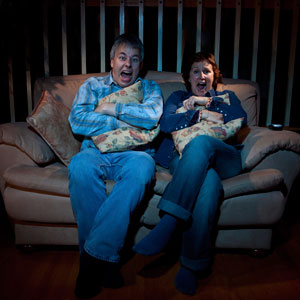

Mental stress experienced during a movie or TV sports event could have an arrhythmogenic effect via ventricular repolarisation, UK cardiologists have shown.
Researchers at The Heart Hospital, University College London, monitored ECG and other haemodynamic and respiratory changes in 19 healthy volunteers who watched an emotionally charged film clip from The Vertical Limit.
As expected, they observed that viewers of the stressful clip showed an increase in BP and breathing rate. These changes were associated with an overall shortening of ventricular activation recovery intervals, from which they inferred shortening of ventricular action potential duration (APD).
Publishing their findings in the journalCirculation, Arrhythmia and Electrophysiology , they noted that the degree of shortening was greater in the right than left ventricle. There was no significant variability between the degree of ARI shortening and distal/ proximal position of recording electrodes in the patients with relatively normal hearts.
Using a repeated-breathing control period they also showed that the haemodynamic and repolarisation changes were not attributable to the alteration in breathing pattern alone, “suggesting that these were predominantly generated by the movie-induced psychological stress.”
The researchers said the APD changes were small and unlikely to pose an arrhythmia risk in healthy individuals. However, patients with coronary heart disease would be expected to show much larger ECG repolarisation changes in response to similar stressors and these could result in ventricular tachycardia and fibrillation.
«Although unlikely to be arrhythmogenic in normal individuals, more extreme stress and / or the presence of cardiac pathology may magnify these effects and provide the substrate for ventricular arrhythmias,” they concluded.
Co-author Professor Peter Taggart said watching televised sports events such as the World Cup may not be good for people with a heart condition. There had been shown to be a spike in hospital admissions, which could be «tied down to stressful quarter-final time», he told the BBC.
http://www.cardiologyupdate.com.au/latest-news/scary-movies-may-trigger-arrhythmias